

A simple way to get started, keep going, and finish your study sessions—without yelling at your willpower.
Body doubling means working alongside someone else, quietly, on your own tasks. It can be in person, on Zoom, or through a study platform. The other person is not tutoring you. They are simply with you. That soft pressure helps you start. The steady presence helps you continue. Many students find it calming, especially when starting feels heavy.
Why body doubling works
It taps three helpful forces. First, co-presence helps you match the calm energy of a partner. Second, gentle accountability nudges you to begin at the time you both chose. Finally, friction reduction removes tiny decisions: you greet, set a timer, and start. As a result, getting over the “activation hump” feels lighter.
You don’t need more willpower. You need a witness to your effort.
Choose your format
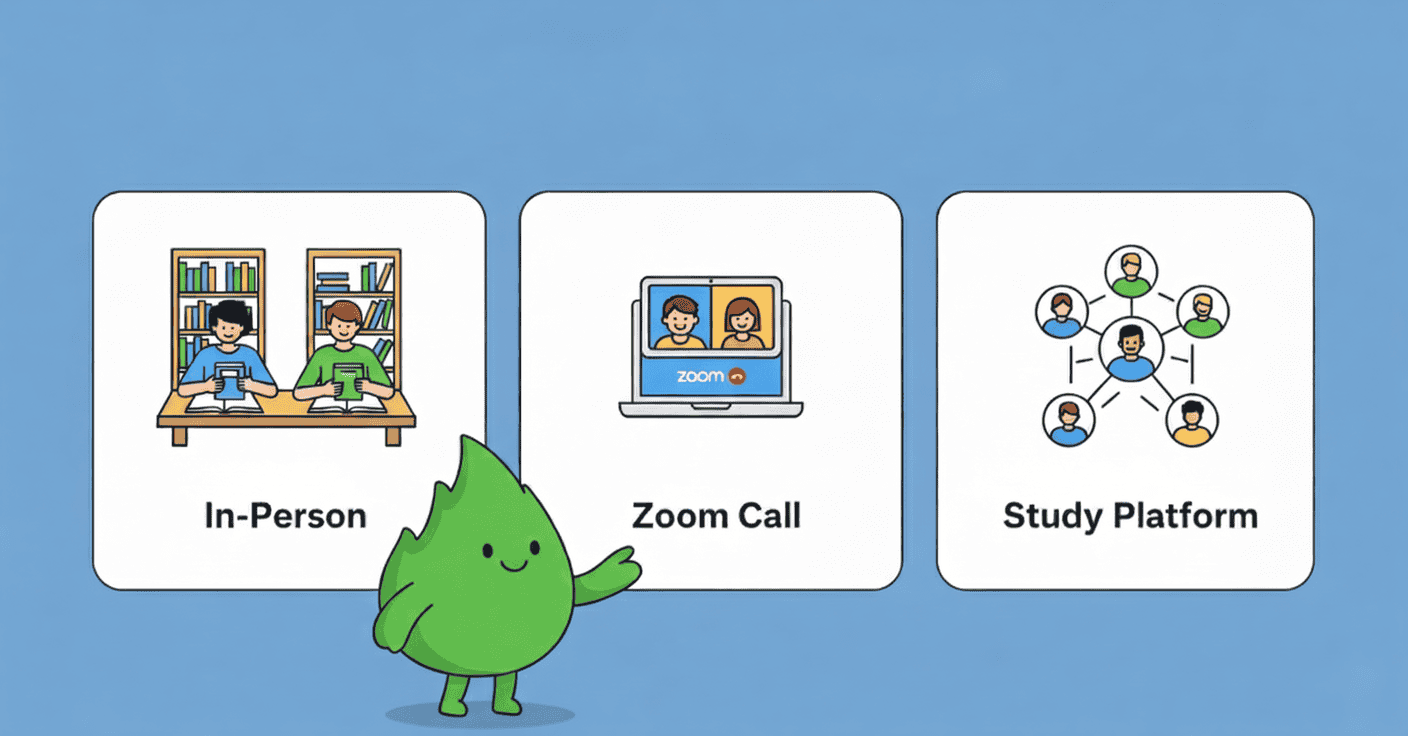
To begin, pick one format and keep it simple; then adjust next week based on what felt easiest.
In-person buddy
Start with the library or a quiet café. Agree upfront on session length and breaks. Next, sit where your screens are visible to each other, not to passersby. Finally, bring only what you need so distractions stay out.
One-to-one on Zoom
Alternatively, use a simple meeting link. Keep cameras on and mics off while working. Then, do brief check-ins at the start and end. If needed, share your screen for quick help and afterward stop sharing before you return to private notes.
Study platforms
Or try a study platform that pairs you with a partner at a set time. Typically, you’ll see timers, light rules for chat, and community rooms. Experiment for a week to find what feels safe and supportive. Meanwhile, school groups often run “Study With Me” rooms you can join.
The session recipe (repeatable)
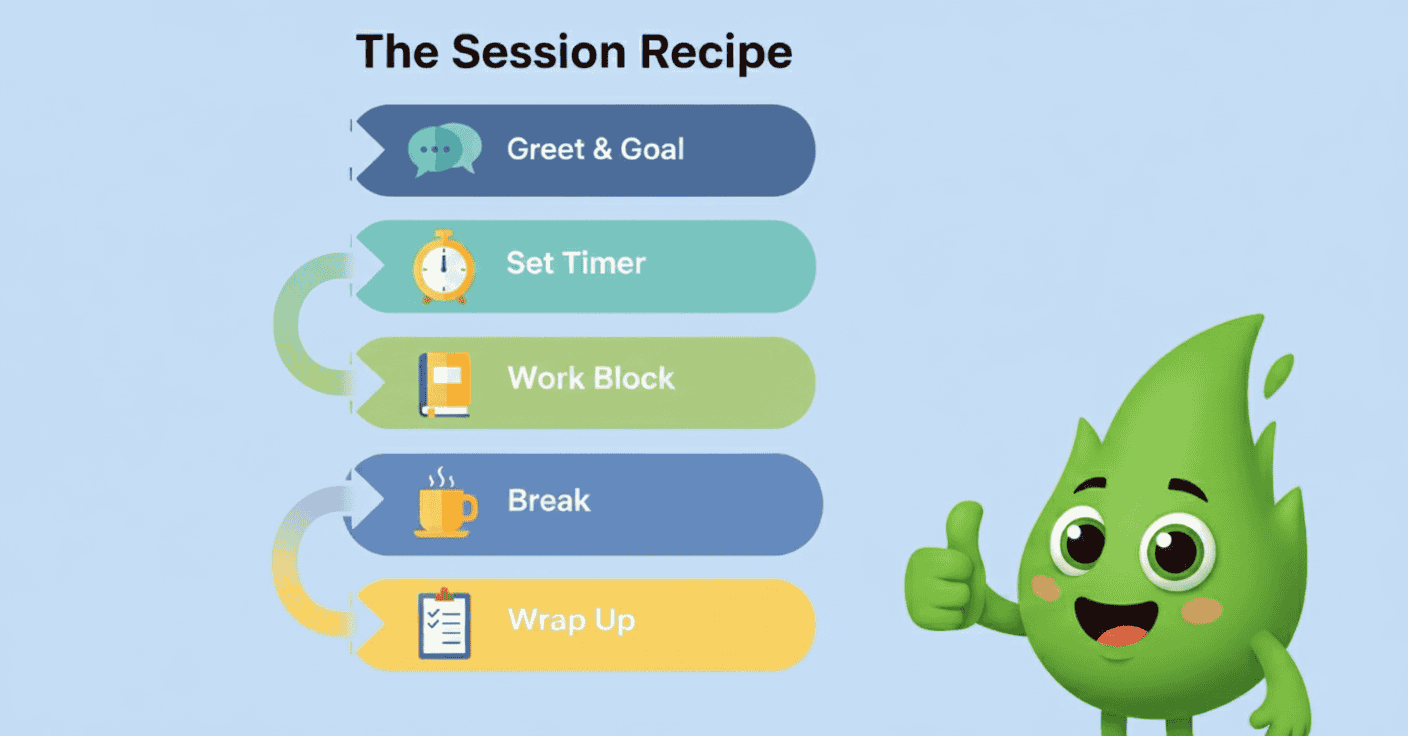
- 0–2 minutes: Greet each other and state one clear goal. For example: “Finish Question Set 4.”
- Next (2–5 minutes): Set a 25- or 45-minute timer, close extra tabs, and put the phone away.
- Then (work block): Focus quietly. If a stray idea appears, park it on paper instead of opening a new tab.
- After that (5–10-min break): Stand up, breathe, drink water, and stretch. However, avoid scrolling trapdoors.
- Finally (2-minute wrap): Say what you finished and the very first step for next time.
Your 2-week starter plan
Week 1 — Build the habit
- Day 1–2: Two 25/5 sessions with a friend or platform. Keep it light. Focus on showing up.
- Day 3–4: Add a third 25/5 if energy allows. End each session with one sentence: “Tomorrow, I will start with ___.”
- Day 5: One longer 45/10 session. Notice when your energy dips. Adjust break timing.
- Day 6: Mixed review. Three mini-blocks, 15 minutes each, across different subjects.
- Day 7: Light recap. No heroics. Plan next week’s session times.
Week 2 — Lock in the routine
- Day 8–9: Two 45/10 blocks. Keep your goals outcome-based: “Finish Qs 1–6 and check answers.”
- Day 10: Try a “silent Zoom” with cameras on and mics off. Use the chat only for start/stop check-ins.
- Day 11: Add a “start ritual” (two deep breaths, set timer, write first line). Rituals reduce friction.
- Day 12: Practice problems only. No rereading until after you attempt.
- Day 13: Group review room or library table with 2–3 classmates. Same rules: quiet, timed, polite.
- Day 14: Reflection. What time of day felt best? Which buddy or platform helped most? Schedule next week accordingly.
Safety and etiquette
Before anything else, set gentle boundaries; then choose the safest place—online or in person.
Online safety
- Use first names only. Do not share your address, phone, or class schedule with strangers.
- Disable recording. Keep screen sharing off unless needed. End share before returning to private work.
- Set time-boxed sessions. Leave the meeting when the timer ends. You can always book another.
- Report and block anyone who ignores boundaries or asks for personal details.
In-person safety
- Meet in public places on campus. Tell a friend where you’ll be and for how long.
- Bring your own device and supplies. Keep valuables in sight.
- If the vibe feels off, you can leave. No explanation needed.
Etiquette that makes it work
- Be on time. Say hello. State a clear goal. Then mute and work.
- Keep small talk for breaks. No side quests.
- End with a two-minute debrief: “I finished ___; next I’ll start with ___.”
Scripts you can copy
Invite a friend: “Hey! Want a 45-minute quiet study session at 7? We start together, do a quick break, and wrap at 7:50.”
Set the plan: “I’ll do Bio Qs 1–6. First step: open the problem set. Timer on for 25.”
Gentle nudge: “Want to try one more 25/5 or stop here?”
Tool I use: Todoist
You don’t need an app to body double; however, a light task manager makes sessions smoother. For example, quick capture keeps stray thoughts off your screen and therefore protects your focus. I use Todoist because quick capture is fast, recurring tasks are easy, and filters keep only today’s study items visible. If you’re curious, here’s the link I use: Todoist plans and features. Choose any tool you like; the goal is a simple list you’ll actually open.
Optional gear that helps (totally not required)
Pick at most one per category—no need to buy everything.





Troubleshooting common snags
When issues pop up, adjust the rules slightly; in many cases, one small tweak restores momentum.
- “I keep drifting.” Normal. When you notice it, look away for ten seconds, breathe out slowly, and restart the sentence you were on.
- “My buddy is chatty.” Set a rule: work blocks are silent; talk during breaks. If that fails, switch partners—no hard feelings.
- “I feel behind.” Shorten blocks to 20–25 minutes and aim for one small, complete outcome. Wins build momentum.
- “I get anxious before starting.” Use a ridiculously small first step: open the file, write the date, read the first question aloud.
Related Reading
- Single-Tasking for Exam Wins — one task at a time for calmer exam prep.
- Pomodoro + Time Blocking: A Study System You Can Keep — schedule windows, then run short focus rounds.
- GTD Method: A Beginner’s Guide — capture and clarify so distractions don’t hijack sessions.
- Study Smarter: 10 Evidence-Based Principles — memory and focus habits that pair well with body doubling.
This article may include affiliate links. We only recommend tools we actually use.


