

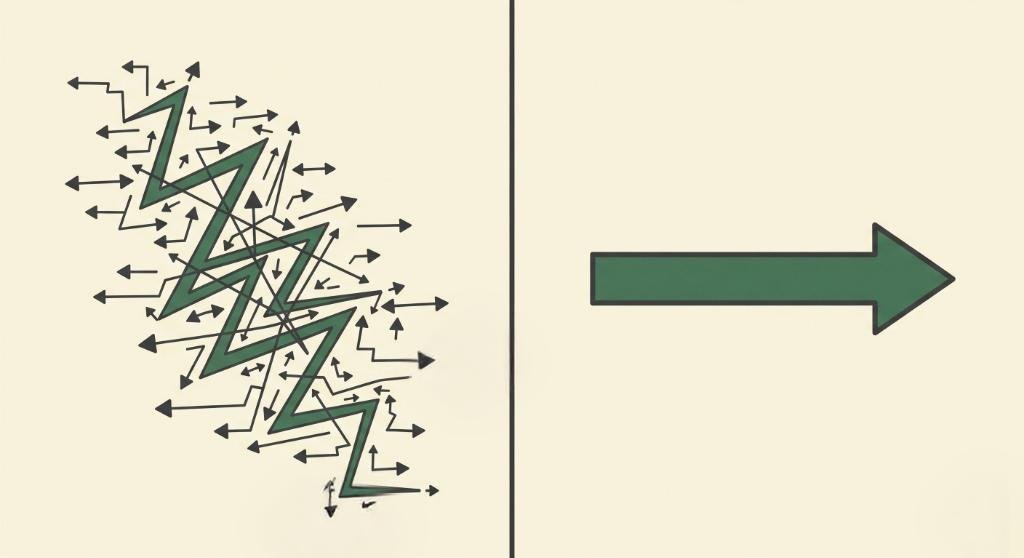
When you try to “do it all” while studying—messages, tabs, and to-dos at once—work feels busy but learning slows down. The culprit is not laziness; it is the way attention works. Your brain does not truly multitask on demanding tasks. It switches. Each switch has a cost: you reload context, your working memory (the scratchpad you think with) gets scrambled, and a little bit of your attention sticks to the thing you just left. The good news: small design choices make switching rarer and recovery faster.
What task-switching actually is
Task-switching is the rapid alternation between activities that each need attention—reading a dense page, replying to a message, peeking at grades, checking the time. Your brain must re-activate the right rules and details whenever you hop. That re-activation takes time and energy. Do it twenty times in an hour and you spend a surprising chunk of that hour “reloading” instead of learning.
Attention residue is the leftover cognitive tug from the last task. You are still half-thinking about the message you sent while you try to read the next paragraph. Residue fades, but not instantly; it’s like echo in a room. Meanwhile, working memory—the mental notepad that holds a few ideas at once—shrinks under pressure. Fewer ideas in the notepad = fuzzier comprehension and more mistakes.

“Switching feels speedy in the moment, but it’s like changing lanes every 30 seconds—lots of steering, not much moving.”
How switching sneaks into study time
- Polite pings. Notifications are tiny but rhythmic. Every ping offers a new lane.
- Dashboard grazing. Grades, email, LMS tabs—each quick peek taxes your notepad.
- “Helpful” music. Lyrics pull language circuits. For heavy reading/problem-solving, silence or instrumental wins.
- Self-interruptions. “I’ll just check the formula,” becomes five tabs later.
Simple fixes you can use today
These reduce switches and shorten recovery when a switch happens:
- One goal per block. Define a sit-down outcome: “Explain osmosis in my own words,” or “Solve problems 1–8.” Vague plans invite wandering.
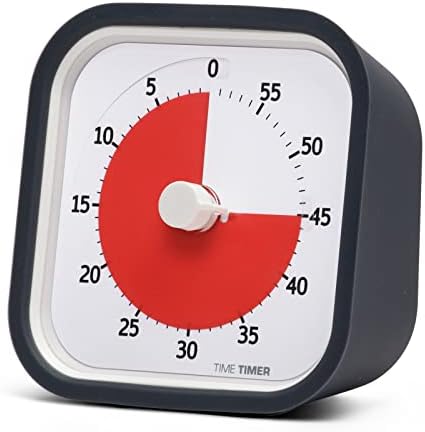
- Short, timed cycles. Use 25/5 or 45/10. Work during the focus interval, take a short, guilt-free break, repeat. Timers make decisions automatic and give your brain a finish line.
- Quick-capture anything that pops up. When “email professor” appears, write it in one trusted list, then return to the page. Your brain relaxes when it knows the thought won’t be lost.
- Silence the room. Notifications off, phone face-down in another spot, music without lyrics (or white noise) for routine tasks—silence for dense reading.
- Close the buffet. Only the materials for this topic on the desk. Fewer visible choices = fewer switches.
Designing a “low-switch” study block
- Pick the task. Example: “Teach the membrane transport diagram in three sentences.”
- Set a 45-minute timer and put your phone in another room. If that feels scary, 25 minutes works too.
- Lay out only what you need: book, notes, calculator; close extra tabs.
- Do the work. Read actively, write, or solve. When a stray thought appears, capture it quickly and resume.
- Break for 5–10 minutes. Stand up, stretch, sip water, look out a window. Avoid doom-scrolling—set a one-minute phone timer if you peek.
- End with retrieval. Close the page and explain the idea without looking; then check what you missed. Add review items for tomorrow.
What to do when you get pulled away
Switches happen. The trick is a fast reset:
- Label it. Say “wandering” in your head. Labels reduce the sting and increase control.
- Reset the eyes. Look away at something distant for ten seconds; it breaks the visual thread from the last task.
- One slow breath, then restart the exact sentence you were on. Don’t hunt around for the “perfect” place—momentum beats precision.
Two small habits that boost memory
- Active recall. Try to produce the idea (from scratch) before you check it. Effort is a signal to keep the memory.
- Spaced review. Revisit tough items after increasing gaps—later today, two days from now, next week. Short, repeated passes beat last-minute marathons.
A one-week “low-switch” plan
- Day 1: One 25/5 to warm up + one 45/10 on the hardest topic. End with two minutes of recall.
- Day 2: Two 25/5 cycles on problem sets. Capture any errands for later.
- Day 3: One 45/10 reading block + 10-minute spaced review of Day 1 notes.
- Day 4: Practice only. Write down three errors to revisit on Day 6.
- Day 5: Two 25/5 cycles + a short “teach-back” summary in your own words.
- Day 6: Mixed review across topics (15 minutes each). Breadth, not depth.
- Day 7: Light recap + plan next week’s blocks. Keep the habit alive.
Keep it humane
You do not need perfect discipline; you need fewer chances to switch. Short blocks, clear goals, quiet defaults, and one capture list remove dozens of micro-decisions. That frees your working memory for the thing you actually came to do: learn.
Readers often ask about simple tools that make switching rarer. Here are a few that pair well with the fixes in this guide — use what helps and skip the rest.




Related Reading
- Study Smarter: 10 Evidence-Based Principles for Focus & Comprehension — practical methods that pair perfectly with low-switch blocks.
- Busy vs Productive (3-Step Fix) — protect focus time from fake urgency.
- Build a Productivity System (5 Steps) — structure your week so focus blocks actually happen.
This article may include affiliate links. We only recommend tools we actually use.


