
Table of Contents
| Step | Topic |
|---|---|
| 1 | Understand What’s Really Going On |
| 2 | Create a Safe Harbor for Communication |
| 3 | Prepare Their Environment to Minimize Unknowns |
| 4 | Give Your Child an Emotional Toolkit |
| 5 | Help Them Reconnect Socially |
| 6 | Become a Partner with the School |
| 7 | Know When to Get More Help |
| FAQs About Back-to-School Anxiety | |
| Conclusion: You’re Building Lifelong Resilience |
That end-of-summer feeling can be a mix of excitement for a new start and a knot of dread in the stomach. While some “back-to-school jitters” are totally normal, for many children, those worries can grow into significant anxiety, casting a shadow over the whole family. In fact, many parents report that the back-to-school season is the most stressful time of the year.
If your child is struggling, please know this: it is not a sign of weakness or a failure in parenting. It’s a natural response to the huge uncertainties of a new school year—new teachers, new friends, and new expectations.
But you are not powerless.
This guide provides a 7-step framework to move your family from worry to confident action. It’s about more than just managing symptoms; it’s about empowering your child with the resilience to overcome their fears and thrive.
Step 1: Understand What’s Really Going On
Before you can help, you need to understand what your child’s back-to-school anxiety looks like and where it’s coming from.
Common Causes of School Anxiety
A child’s fear is rarely about just one thing. It’s usually a mix of social, academic, and personal worries.
- Social Fears: The number one driver is often social anxiety. Kids worry intensely about fitting in, making friends, and being judged by their peers. Simple things like eating in the cafeteria can feel terrifying.
- Academic Pressure: Older students especially feel performance anxiety—a dread of bad grades, failing tests, or being unprepared for class.
- Separation Anxiety: Common in younger children, this is an intense fear of being away from you. They may worry something bad will happen to a parent while they are at school.
- Sensory Overload: The noise and crowds of a school can be overwhelming, especially for neurodiverse children with conditions like ADHD or autism.
How to Spot the Hidden Signs
Kids often don’t have the words to say, “I’m anxious.” Instead, they show you through their behavior and body.
- Behavioral Clues: This can look like trouble concentrating, irritability, angry outbursts, avoiding homework, or a sudden drop in grades.
- Emotional Clues: Your child might seem extra clingy, withdrawn, quiet, or cry more easily. They may be stuck in a loop of negative thoughts.
- Physical Clues: Anxiety is physical. Frequent stomach aches, headaches, or nausea—especially on school mornings—are classic signs. These aches often magically disappear if they’re allowed to stay home.
Normal Jitters vs. A Potential Problem
So how do you know if it’s typical nerves or something more serious? The key differences are duration, severity, and impact. Normal jitters fade after a few weeks. A potential anxiety disorder sticks around, causes significant distress, and gets in the way of daily life, like causing school refusal or a major drop in grades.

Step 2: Create a Safe Harbor for Communication
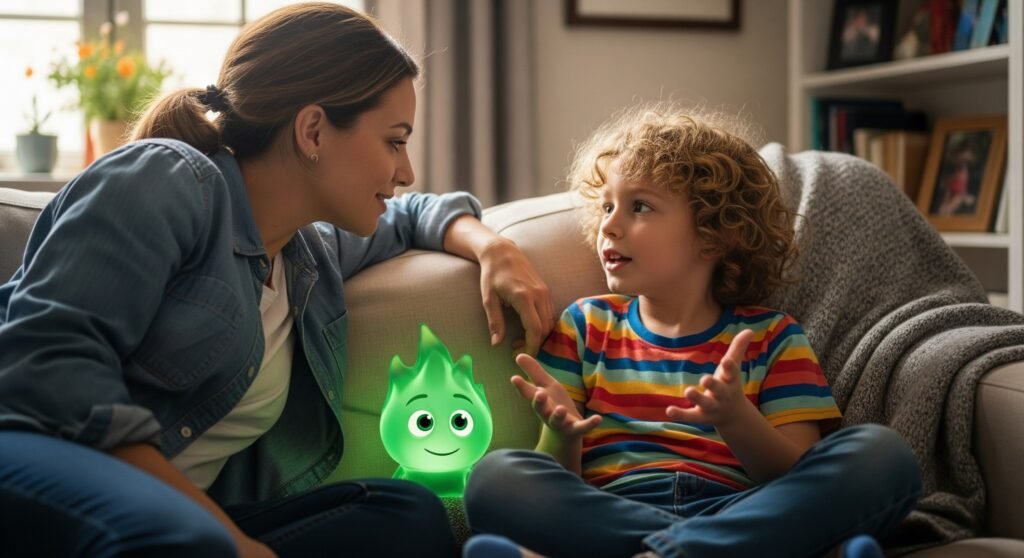
Before any strategy can work, your child needs to feel safe enough to share their fears with you. This means creating a judgment-free zone at home.
The most important first step is validation. When your child says, “I’m scared,” resist the urge to immediately say, “Don’t worry, you’ll be fine!”. While well-intentioned, this can make them feel like their feelings are wrong.
Instead, validate their emotion first. It’s the key that unlocks the conversation. Try saying:
- “It makes sense that you’re feeling nervous. Starting a new grade is a big deal.”
- “It sounds like you’re worried about that math test. That’s an understandable feeling.”
Once they feel heard, you can gently ask questions. Avoid dead-end questions like, “Did you have a good day?”. Instead, try gentle, open-ended prompts during low-pressure moments, like a walk or bedtime:
- “I wonder what your new teacher will be like.”
- “What was something that made you laugh today?”
Finally, model healthy coping yourself. Children learn how to handle anxiety by watching you. You can say something like, “I’m feeling some butterflies about my big meeting tomorrow. That’s just my body telling me to be prepared, so I’m going to review my notes. I know I can handle this.”.
Step 3: Prepare Their Environment to Minimize Unknowns
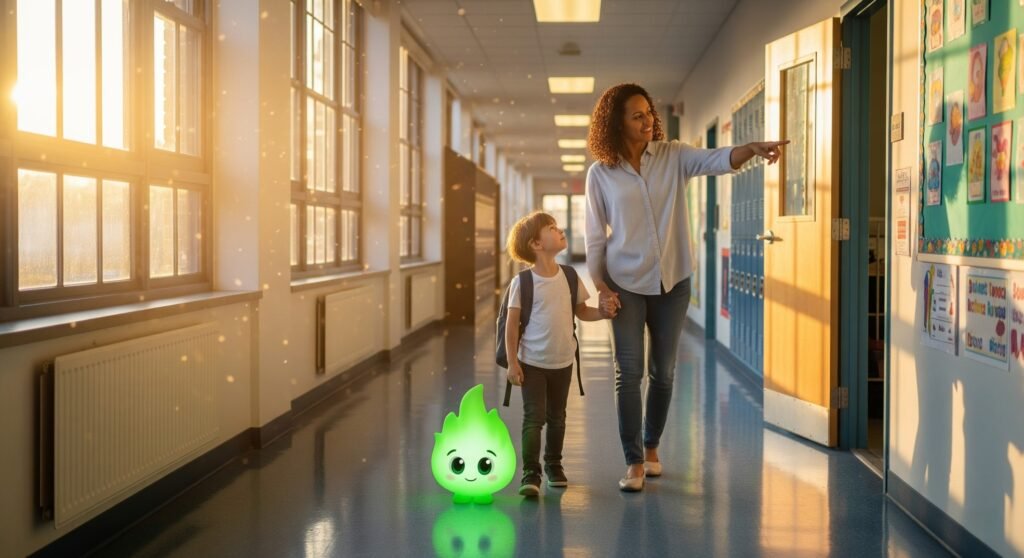
Anxiety loves uncertainty. You can fight back with predictability and structure. These practical steps can make a huge difference.
- Reset the Routine: One to two weeks before school starts, begin easing back into school-year sleep schedules. A gradual shift is much less jarring than a sudden change. Good sleep is critical for emotional regulation.
- Demystify the New: Make the unknown familiar. Visit the new school or classroom several times before the first day. Walk the route from the entrance to their classroom, find the bathrooms, and play on the playground to create positive feelings about the space.
- Empower with Choice: Anxiety often feels like a loss of control. Give some of that power back by offering small, meaningful choices. Let them pick out their own backpack, lunchbox, or a special first-day-of-school breakfast.
Step 4: Give Your Child an Emotional Toolkit
You can’t be with your child every second of the school day, but you can equip them with internal tools to manage anxious moments on their own.
Grounding Techniques to Calm a Racing Mind
These skills pull a child out of future “what if” worries and anchor them in the present moment.
- Five-Finger Breathing: Have them trace up their thumb while breathing in, and down the other side while breathing out. Continue for all five fingers.
- The 5-4-3-2-1 Game: When anxiety spikes, guide them to name: 5 things they can see, 4 things they can feel, 3 things they can hear, 2 things they can smell, and 1 thing they can taste.
Thinking Tools to Challenge Worries
- Name the Worry: Help your child externalize their anxiety by giving it a silly name, like “the Worry Monster”. This makes the worry feel like something separate from their identity that they can manage.
- Create Coping Statements: Work together to create a list of true and positive statements they can keep in their pocket. Not empty fluff, but real evidence of their strength, like: “I can do hard things,” or “I’ve been brave before.”.


Step 5: Help Them Reconnect Socially

Feeling accepted and valued by peers and teachers is one of the most powerful antidotes to back-to-school anxiety. When kids feel socially disconnected, their brains are literally less able to focus and learn.
You can be a social architect for your child.
- Arrange Pre-School Socials: Proactively schedule a playdate or hangout with a familiar friend before school starts. Knowing they’ll see at least one friendly face can be a huge relief.
- Use Extracurriculars: Unstructured times like lunch can be major anxiety triggers. Extracurriculars like sports, chess club, or robotics provide built-in structure and a community of like-minded peers.
Step 6: Become a Partner with the School
You are not in this alone. Your child’s school should be your #1 ally. The key is to approach them as a collaborative partner, not an adversary.
Start by requesting a meeting with the teacher or school counselor. Frame the conversation with a powerful opening: “You are the expert on the classroom, and I am the expert on my child. I would love to partner with you to figure out how we can best support them this year.”
Be ready to ask for specific, reasonable accommodations. Many parents don’t know what’s possible.
A Menu of In-School Support Ideas:
| Accommodation | What It Is & How It Helps |
|---|---|
| Flexible Arrival | Arriving 10 minutes early or late to avoid crowded, chaotic hallways. |
| Designated Safe Person & Space | A pre-arranged staff member and quiet room the child can go to when overwhelmed, giving them a sense of control. |
| “Exit Card” | A non-verbal card the child can show the teacher to be excused without having to explain themselves in front of the class. |
| Peer Buddy | Pairing them with a kind, friendly peer for unstructured times like lunch or walking between classes. |
| Visual Timetable | A schedule of the day’s events to make the day feel predictable and less overwhelming. |
Step 7: Know When to Get More Help
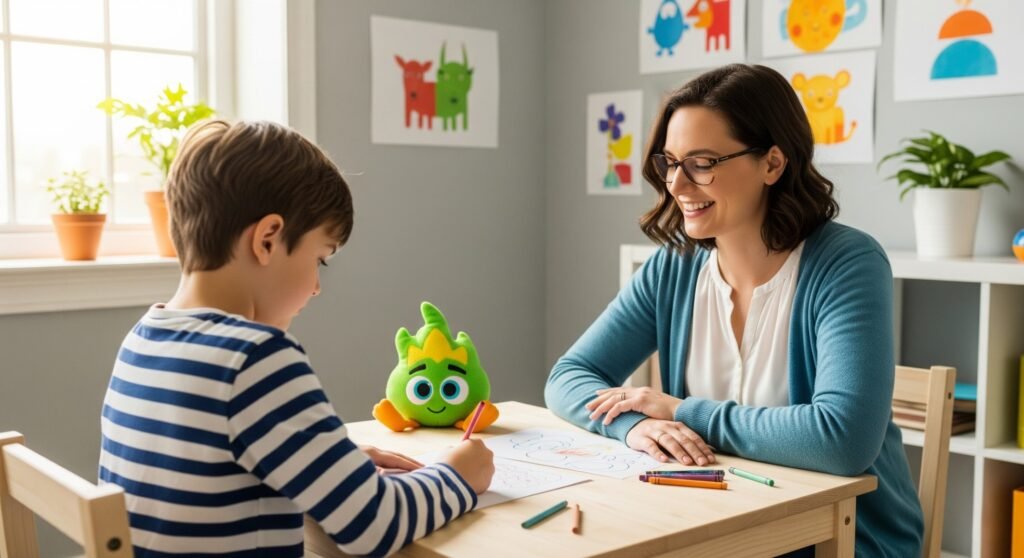
Supporting an anxious child is a journey. Sometimes, despite your best efforts at home and school, the anxiety is too big to handle alone. That is not a failure; it’s a signal to bring in more support.
Revisit the “red flags” from Step 1. If the anxiety is getting worse, not better, after several weeks, or if it’s severely impacting their ability to go to school, it’s time to seek professional help. School refusal that becomes a chronic pattern is a major red flag.
So, if the anxiety is persistent, severe, or worsening after a few weeks, professional help is essential.
- Start with your pediatrician for a medical check and referrals.
- CBT (Cognitive Behavioral Therapy) is highly effective for childhood anxiety.
- Frame therapy positively: “You’re not broken—we’re getting you a feelings coach.”
FAQs About Back-to-School Anxiety
Q1: What are normal back-to-school jitters vs. serious anxiety?
A: Normal jitters fade in a few days or weeks. Serious anxiety sticks around, affects sleep, grades, or willingness to go to school, and often causes physical symptoms.
Q2: What should I do if my child refuses to go to school?
A: Stay calm, validate their feelings, and work with the school right away. Chronic refusal needs professional support—don’t wait too long.
Q3: Should I let my child stay home if they have anxiety?
A: Occasional “mental health days” are okay, but regular avoidance can make anxiety worse. Collaborate with your school and healthcare provider for a plan.
Q4: How can I talk to my child about going to therapy?
A: Present it positively as getting expert help, like a coach, to learn new skills for big feelings—not as a punishment.
Q5: Are there resources for parents of anxious children?
A: Yes! Visit Child Mind Institute and Anxiety Canada for practical tools and support.
Q6: How can teachers help with back-to-school anxiety?
A: Teachers can provide structure, check-ins, buddy systems, and clear communication. Share your child’s needs with them early.
Conclusion: You’re Building Lifelong Resilience
Navigating back-to-school anxiety is tough, but you’re not alone. By following these 7 steps, you’re not just getting through September—you’re helping your child build lifelong courage and confidence.
The goal isn’t to erase anxiety forever, but to empower your child to think:
“This feels hard, but I know I can handle it.”
What’s one strategy that’s helped your child? Share your experience in the comments below!
What’s one strategy that has helped your child with back-to-school worries? Share your experience in the comments below!


