

Introduction: Why Most Students Study Hard But Learn Little
Picture this:
It’s the night before your big exam. You’ve been at your desk for hours—highlighter in hand, eyes darting over every sentence in the textbook. You finally close the book, feeling confident you’ve “covered everything.”
The next morning, you flip over the first exam page… and your mind goes blank.
This frustrating scenario is painfully common. The problem isn’t laziness—it’s the method. Many learners rely on passive techniques like rereading, highlighting, or rewriting notes. These strategies feel productive, but decades of research show they’re among the least effective ways to learn.
Cognitive science has repeatedly shown that active engagement—retrieving, processing, and applying information—is the key to deep, lasting learning. By using evidence-based learning principles, you can replace ineffective habits with strategies that truly work.
💡 Key Takeaway: The best study methods actively challenge your brain rather than passively exposing it to information.
1. Architect Your Learning Space for Deep Focus
Your environment isn’t just background—it’s a powerful learning tool.
Dedicated Space: Always study in the same spot to condition your brain for focus. Avoid multipurpose areas like your bed, which create conflicting mental cues.
Ergonomics: Use a supportive chair, proper desk height, and lighting that prevents eye strain.
Clutter-Free Zone: Clear away visual distractions to reduce mental load.
Digital Fortress: Turn off notifications, use site blockers, and set device-free rules to protect your attention.
📌 Fact: A cluttered desk can increase mental fatigue by adding unnecessary “visual noise” that competes for your attention.
2. Master Time and Attention with the Pomodoro Technique
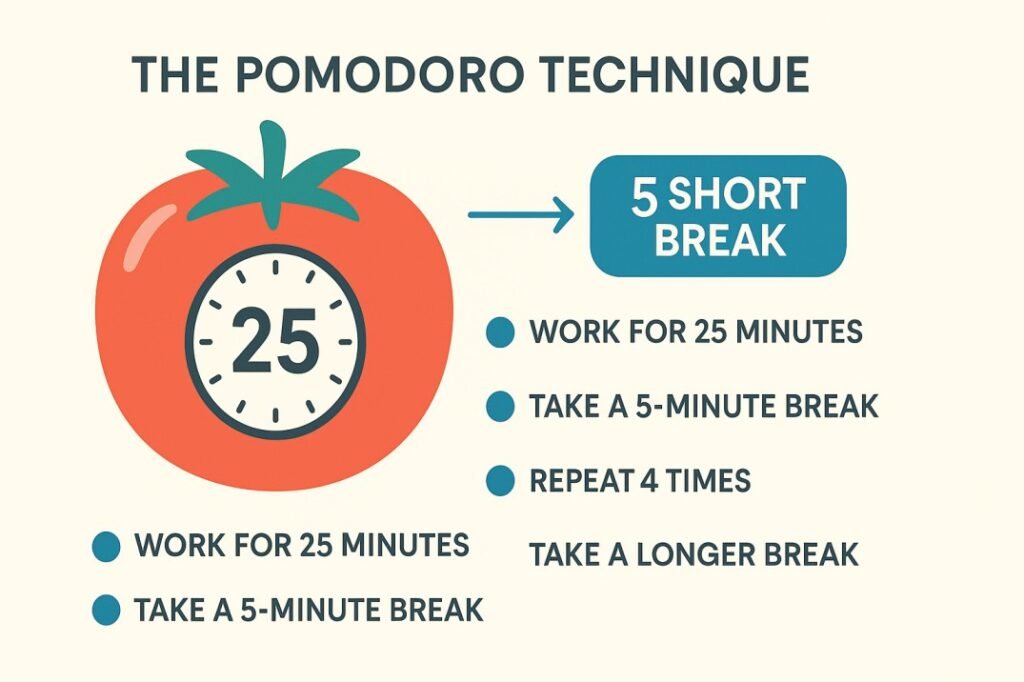
The Pomodoro Technique, created by Francesco Cirillo, breaks work into 25-minute focus intervals followed by 5-minute breaks.
Benefits:
- Turns intimidating tasks into manageable chunks.
- Builds “focus stamina” over time.
- Provides structured rest to prevent burnout.
Adjust intervals (e.g., 45/15) to match your attention rhythm.
🕒 Fact: Short bursts of deep focus followed by breaks can help prevent mental burnout and keep productivity high.

3. Optimize Sleep, Nutrition, and Exercise
Your brain runs on biology. Neglecting health undermines every other strategy.
Sleep: Research from UC Berkeley shows sleep deprivation can reduce the brain’s capacity to learn new information by up to 40%. Sleep before learning primes memory encoding; sleep after learning consolidates knowledge. Aim for 7–9 hours.
Nutrition: Prioritize omega-3s (fish, walnuts), antioxidants (berries, greens), and complex carbs for steady energy. Avoid sugar spikes that crash focus.
Exercise: Even a brisk 15-minute walk increases blood flow and oxygen to the brain, boosting alertness. Long-term exercise raises brain-derived neurotrophic factor (BDNF), which supports learning and memory.
4. Harness Active Recall
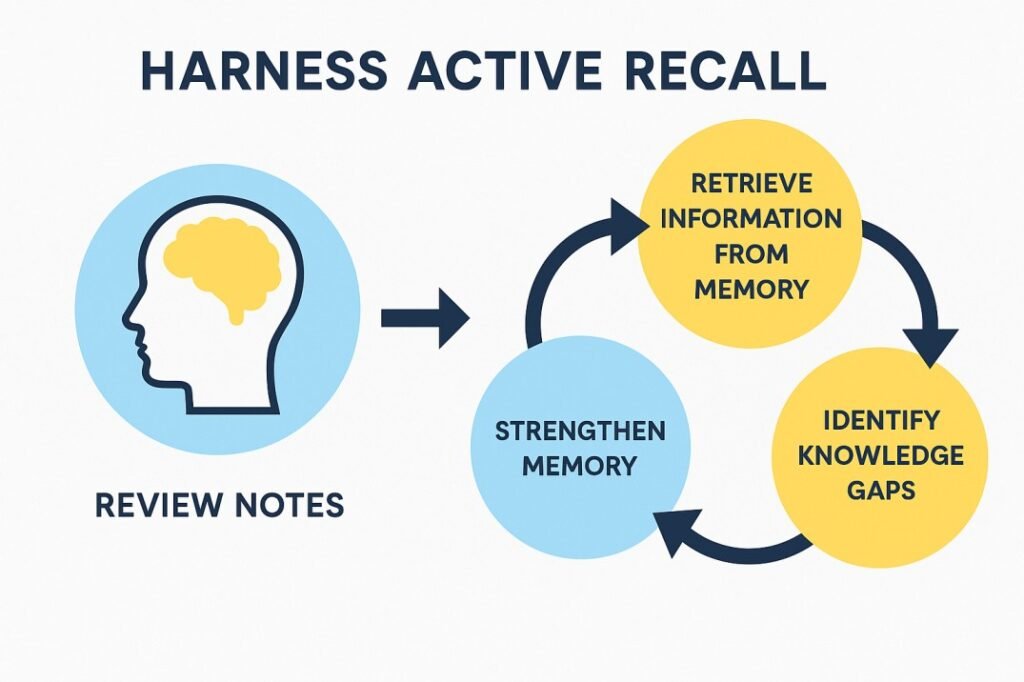
Instead of re-reading notes, retrieve information from memory.
One famous study by Jeffrey Karpicke found that students who practiced repeated retrieval of information remembered 80% of material a week later—compared to less than 30% for those who only reviewed it passively.
Methods:
- Practice Testing: Use quizzes for learning, not just assessment.
- Leitner Flashcards: Review harder cards more often.
- Brain Dumps: Write everything you know without looking at notes.
🎯 Fact: Active recall strengthens neural pathways, making information easier to access when you need it.
5. Use Spaced Repetition to Defeat the Forgetting Curve
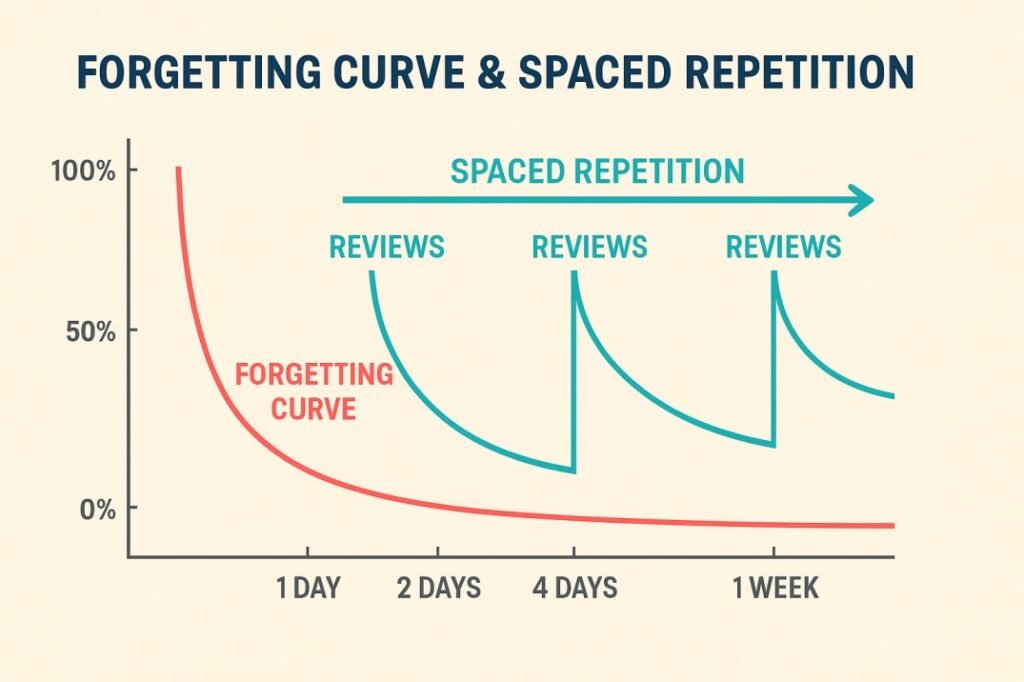
In the 19th century, Hermann Ebbinghaus discovered the Forgetting Curve—a predictable drop in memory retention over time. Without review, most people forget the majority of new information within days.
Spaced repetition—reviewing material at gradually increasing intervals—strengthens memory and slows forgetting. Combine spacing with active recall for maximum retention. Tools like Anki automate optimal review timing.
📌 Fact: Spaced repetition turns short-term memory into long-term knowledge by revisiting information just before you forget it.
6. Apply the Feynman Technique for True Understanding
Physicist Richard Feynman’s method forces clarity and exposes weak understanding:
- Pick a concept and write it at the top of a page.
- Explain it simply, as if teaching a child.
- Identify gaps and revisit the material.
- Simplify and create analogies.
💡 Fact: If you can’t explain it simply, you probably don’t understand it deeply.
7. Connect Knowledge with Interleaving, Elaboration, and Dual Coding
- Interleaving: Mix different topics in one session to train problem recognition.
- Elaboration: Ask “how” and “why” to integrate new ideas with what you already know.
- Dual Coding: Pair words with visuals (diagrams, timelines) to create double memory traces.
These study smarter techniques help prepare your brain for real-world problem solving.
8. Visualize with Mind Mapping
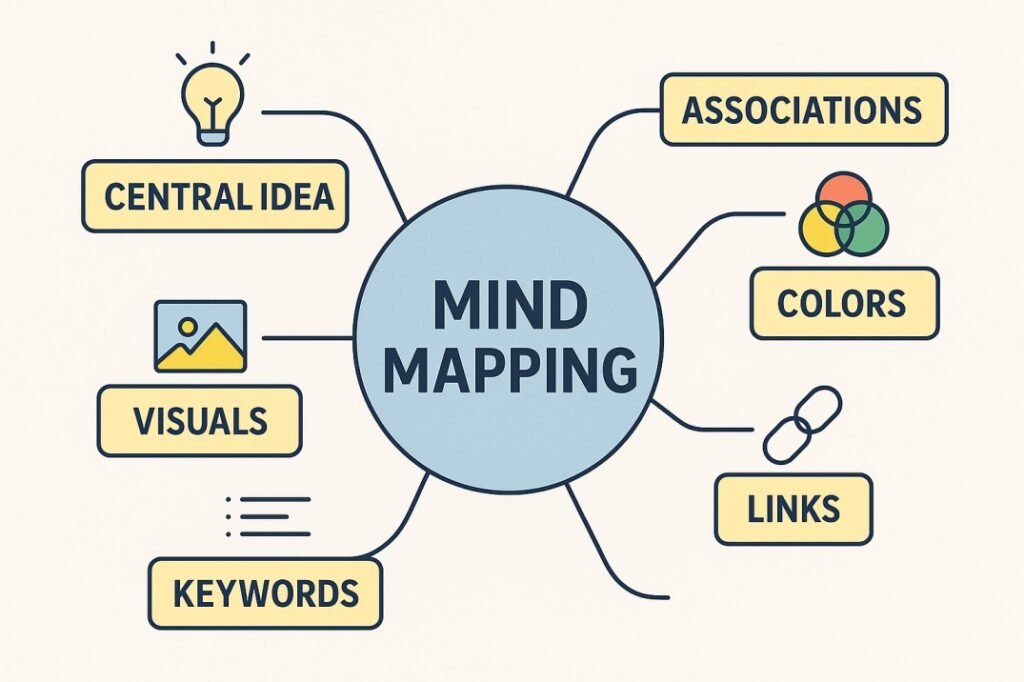
Mind maps mimic how your brain stores information—through connections, not lists.
- Start with a central idea, branch out with keywords, and link related concepts.
- Use colors and symbols for better recall.
- Build maps from memory for active recall.
9. Take Notes That Work for You
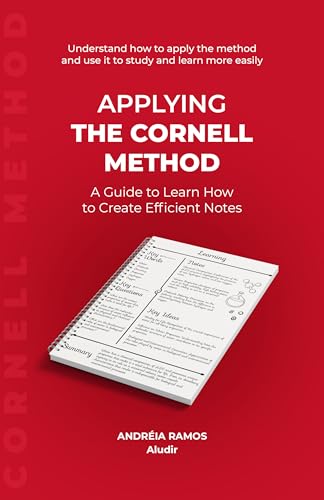
The Cornell Method turns note-taking into a thinking process:
- Right Column: Concise notes during class or reading.
- Left Column: Questions or cues after review.
- Bottom Section: One-sentence summary.
These notes become instant active recall prompts, feeding into spaced repetition.

10. Build Your Personal Learning System
Metacognition—thinking about your thinking—ties everything together.
Example routine:
- Morning: Spaced recall (flashcards).
- Afternoon: Deep work with interleaving + Pomodoro.
- Evening: Mind map review or Feynman explanations.
Treat learning like an experiment: track results, tweak strategies, and repeat.
FAQs
Q1: What’s the most effective single study method?
Active recall with spaced repetition.
Q2: Should I still highlight textbooks?
Only if it’s paired with active review.
Q3: How soon can I see results?
Within 2–3 weeks of consistent use.
Q4: Is the Pomodoro Technique too rigid?
Not at all—adjust intervals to fit your focus span.
Q5: Can these methods help in skill-based learning?
Yes—coding, languages, and sports all benefit.
Q6: How do I avoid burnout?
Balance work with rest, quality sleep, and exercise.
Conclusion: Become the Architect of Your Own Knowledge
Studying smarter isn’t about cramming more hours—it’s about evidence-based learning principles that make every minute count. By applying these techniques—from optimizing your environment to mastering retrieval—you’ll not only excel academically but also gain the lifelong skill of learning how to learn.
📥 Free Bonus: Get Your “Study Smarter” PDF Cheat Sheet
Want all 10 evidence-based learning principles in one easy reference guide?
Click here to download your free Study Smarter cheat sheet and start mastering your learning today.


2 Comments